The Society of Motion Picture and Television Engineers (SMPTE) is an
internationally-recognized standards developing organization. Headquartered
and incorporated in the United States of America, SMPTE has members in over
80 countries on six continents. SMPTE’s Engineering Documents, including
Standards, Recommended Practices, and Engineering Guidelines, are prepared
by SMPTE’s Technology Committees. Participation in these Committees is open
to all with a bona fide interest in their work. SMPTE cooperates closely
with other standards-developing organizations, including ISO, IEC and ITU.
SMPTE Engineering Documents are drafted in accordance with the rules given
in its Standards Operations Manual.
At the time of publication no notice had been received by SMPTE claiming patent
rights essential to the implementation of this Engineering Document.
However, attention is drawn to the possibility that some of the elements of this document may be the subject of patent rights.
SMPTE shall not be held responsible for identifying any or all such patent rights.
This document was prepared by Technology Committee 27C.
This clause is entirely informative and does not form an integral part of this Engineering Document.
The 27C Stereo Subtitling drafting group has found that some subtitle rendering devices, deployed in the field, conform to older revisions of SMPTE ST 428-7, but not to the SMPTE ST 428-7: 2014 version (latest version as of the date of publication of this EG). Others have different interpretations of ambiguous portions of the specification. This variance in behavior can cause subtitle characters to be displayed in theaters differently than what was intended during mastering. This has sometimes delayed the adoption of SMPTE-compliant D-Cinema Packages (DCPs), as has happened in Japan.
This mastering engineering guideline presents some common Japanese use cases with XML examples and intended rendered appearance to minimize the differences among products and various SMPTE ST 428-7 implementations, and to allow broader adoption of SMPTE-compliant DCPs and their continued usage with confidence.
This engineering guideline provides several XML examples of common Japanese use cases, along with their expected appearance and mastering recommendations to respect as best as possible the intent of the content creator.
This Engineering Guideline is purely informative and meant to provide tutorial information to the
industry. It does not impose Conformance Requirements and avoids the use of Conformance Notation.
Engineering Guidelines frequently provide tutorial information about a Standard or Recommended Practice
and when this is the case, the user should rely on the Standards and Recommended Practices referenced for
interoperability information.
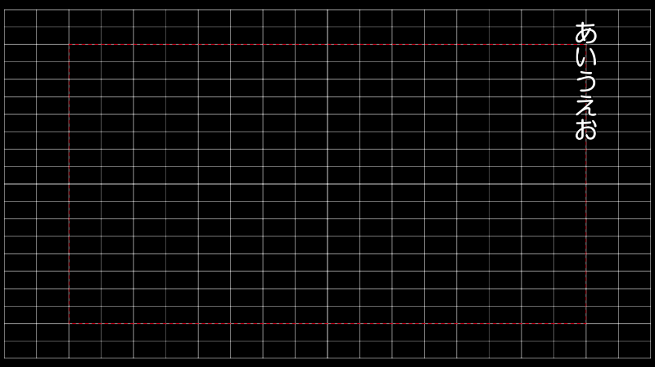
Vertical text corresponds to text that is vertically rendered, as shown in Figure 1, and specified using a Direction attribute value of ttb or btt as defined in SMPTE ST 428-7. The vertical text is used when the subtitle cannot be placed at the bottom of the primary picture as horizontal text due to possible overlap with the other on-screen text, or because of director/translator intent.
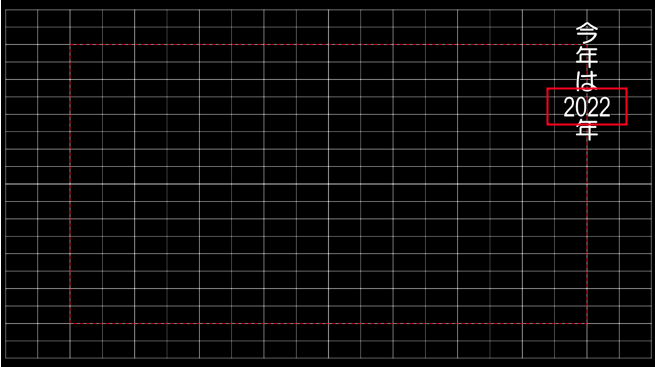
In vertical text, the TateChuYoko places numbers side-by-side instead of vertical stacking for easier reading, as shown in Figure 2. In general, it uses up to four digits.
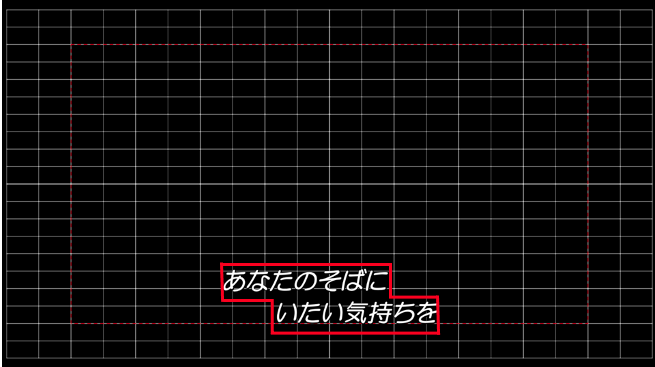
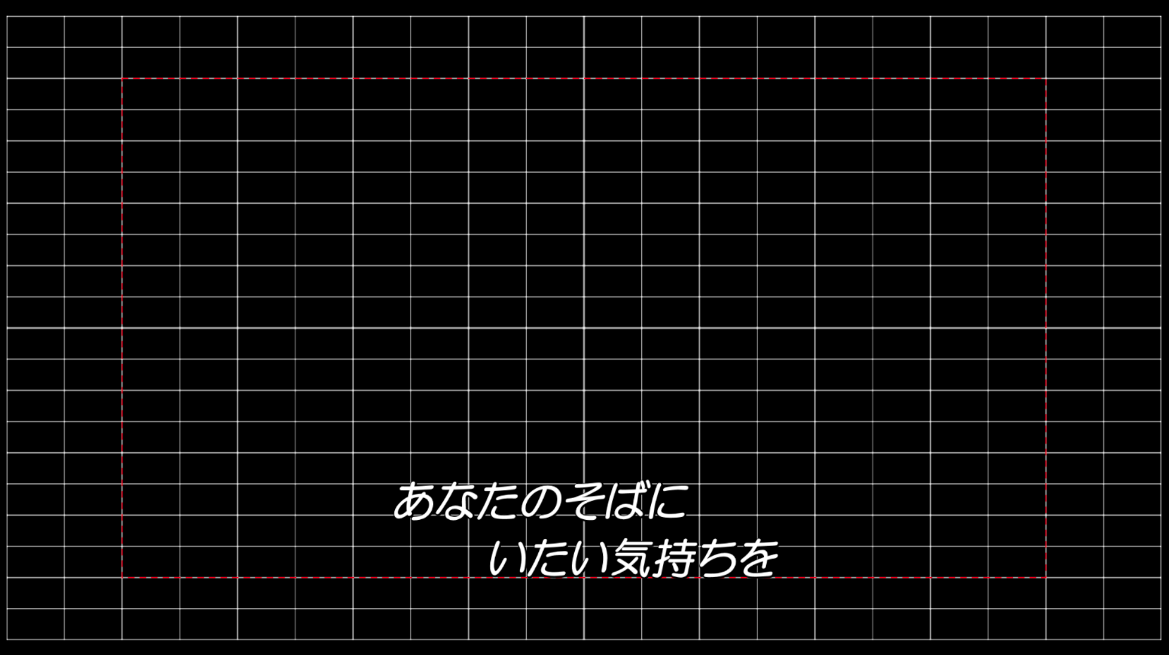
The Chidori-style is used for song lyrics. It shifts the beginning of the first and second lines by placing space characters at the end of the first line and space characters at the beginning of the second line, as shown in Figure 3.
Clause 6.3.4 of SMPTE ST 428-7: 2014 states, that when present, the Vposition attribute specifies "the distance of the text's baseline from the edge or the center of the primary picture." This requirement differs from prior versions of SMPTE ST 428-7, leading to different subtitle vertical positions, especially in the case of vertical text. This might cause subtitle character(s) to unexpectedly be positioned outside of the primary picture, and therefore partially or entirely hidden by the projection mask.
EXAMPLE
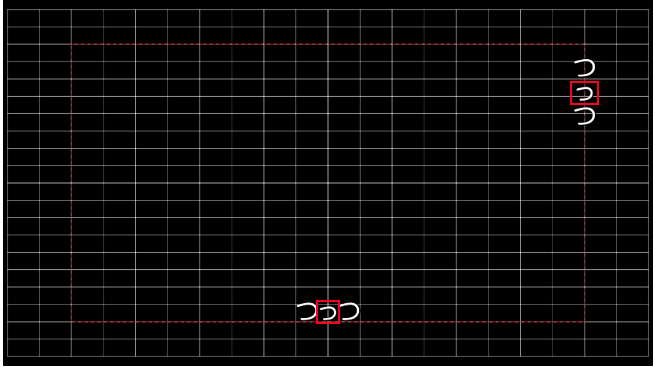
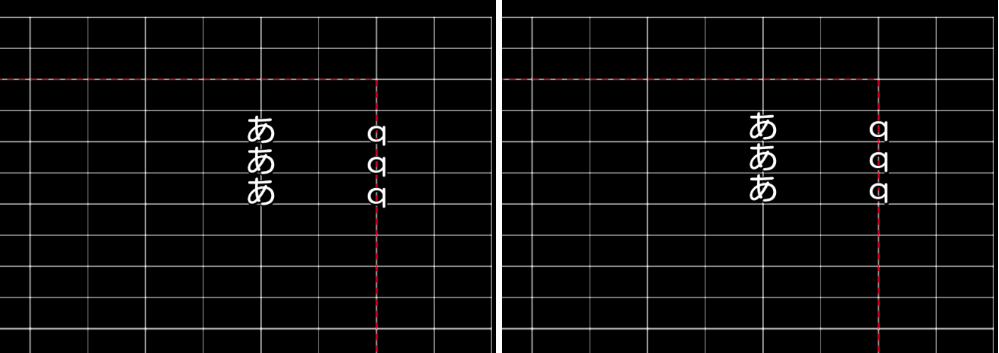
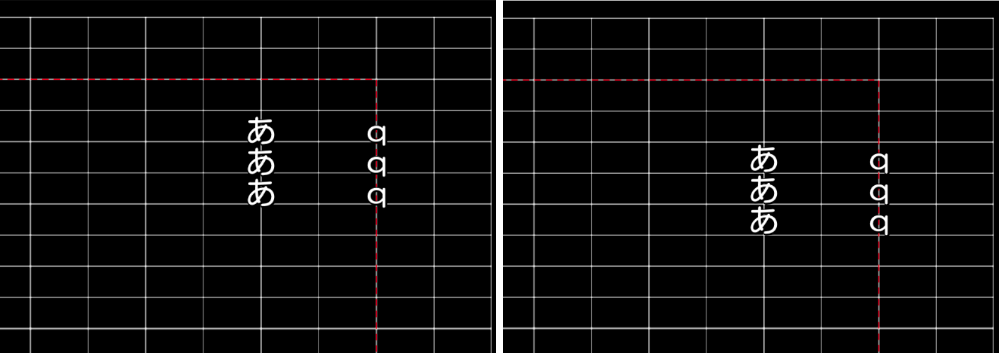
The top subtitle character might be hidden partially when the Vposition value is not enough to account for the character's size, used with Valign="top", as shown in Figure 6. And a long subtitle character chain might also be truncated at the bottom edge of the primary picture.
Figure 6 — Example of subtitle characters partially hidden by Projection Mask🔗
6.1.2Subtitle vertical positioning when using Valign="top"🔗
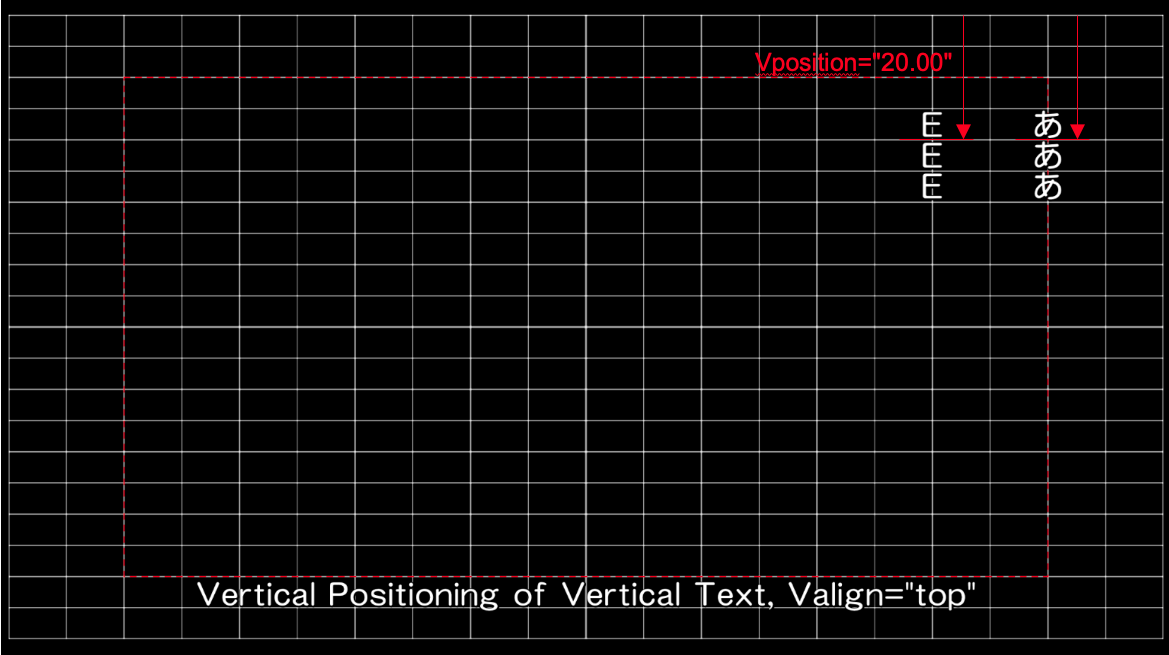
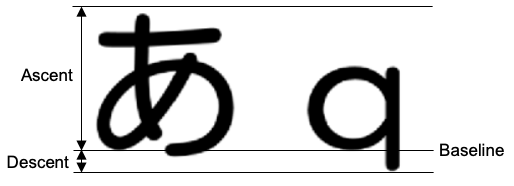
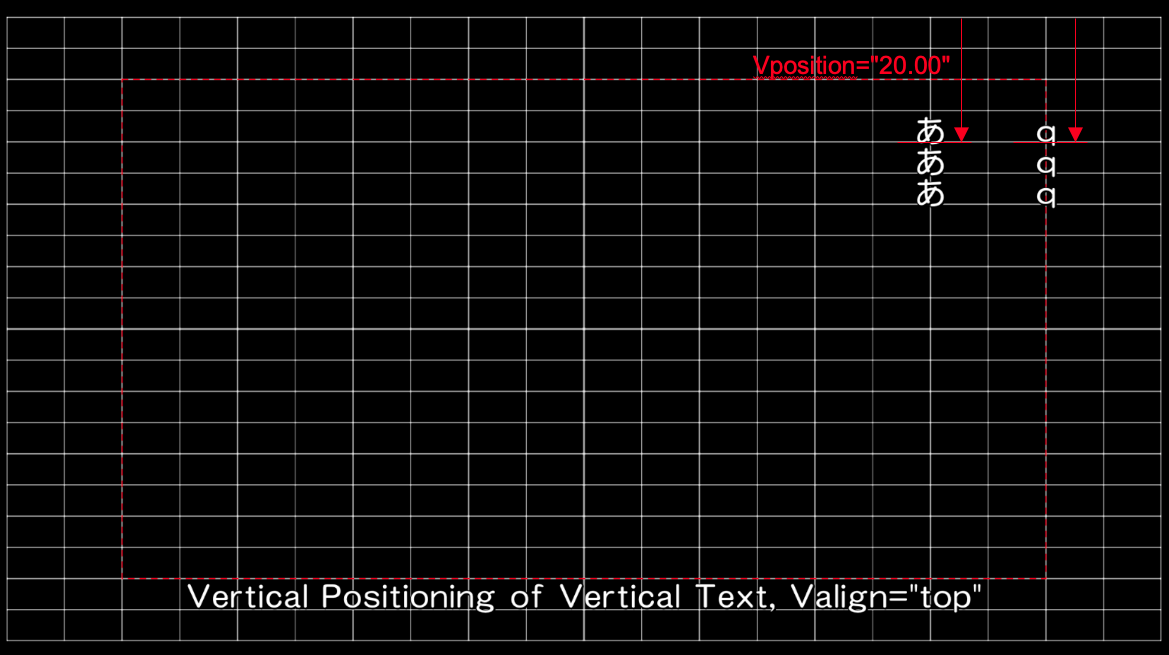
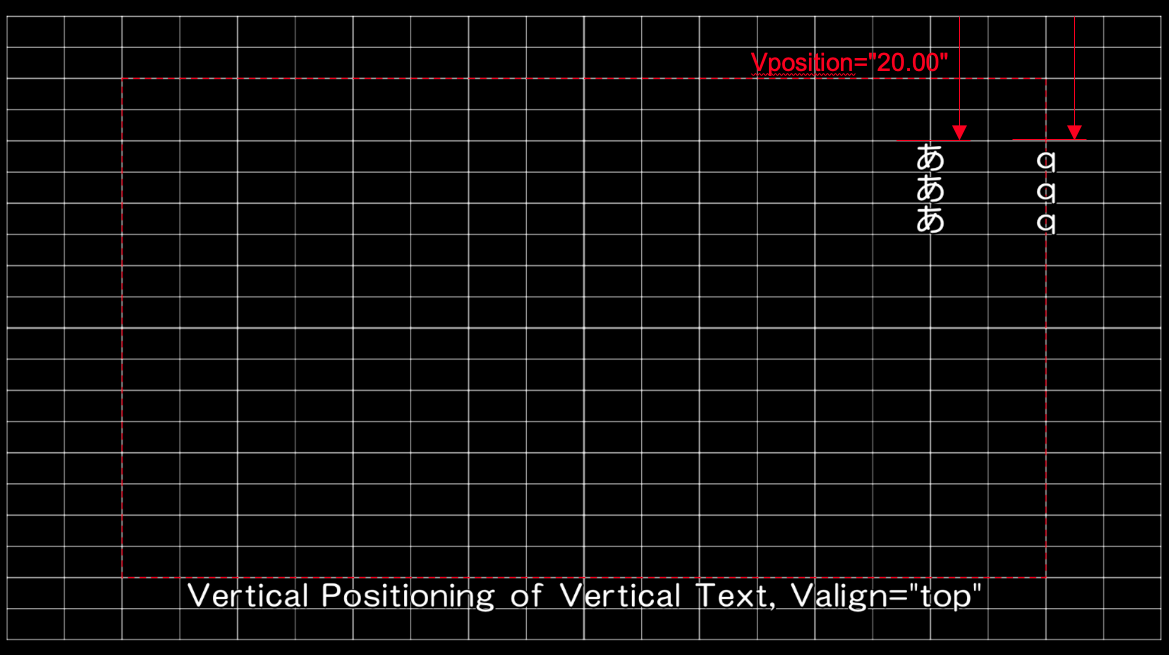
When defining subtitle vertical positioning using Valign="top", to choose a position that is expected to work on all rendering systems, it is recommended to take into account that the exact subtitle position might vary by one character's "Ascent" height depending on the SMPTE ST 428-7 version implemented.
The example below illustrates results obtained by the implementation of different SMPTE ST 428-7 versions.
EXAMPLE
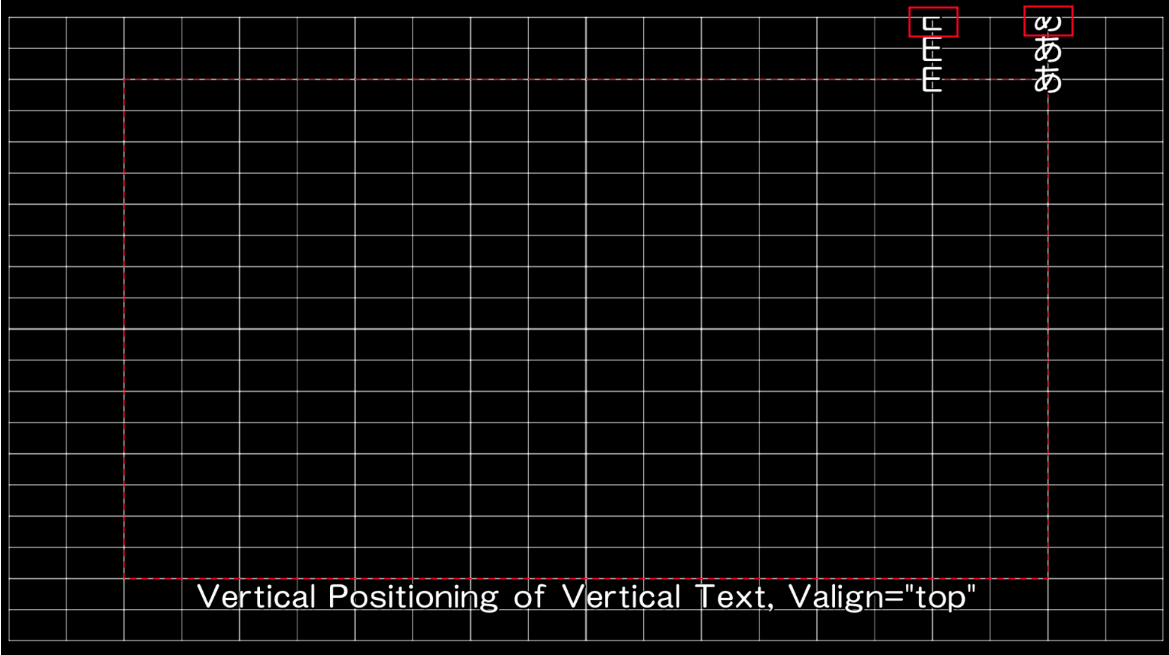
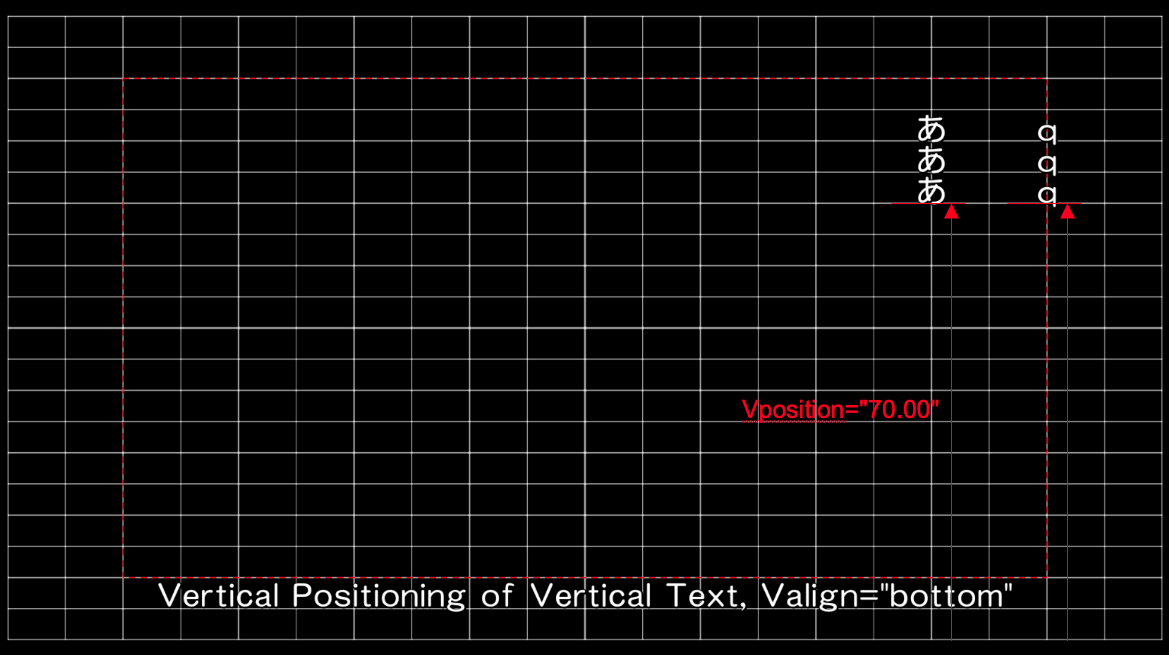
XML excerpt containing Vposition values specified by content creator expecting compliance with SMPTE ST 428-7: 2014:
is expected to produce a rendering as shown in Figure 7,
Figure 7 — Desired vertical positioning of vertical text sample🔗
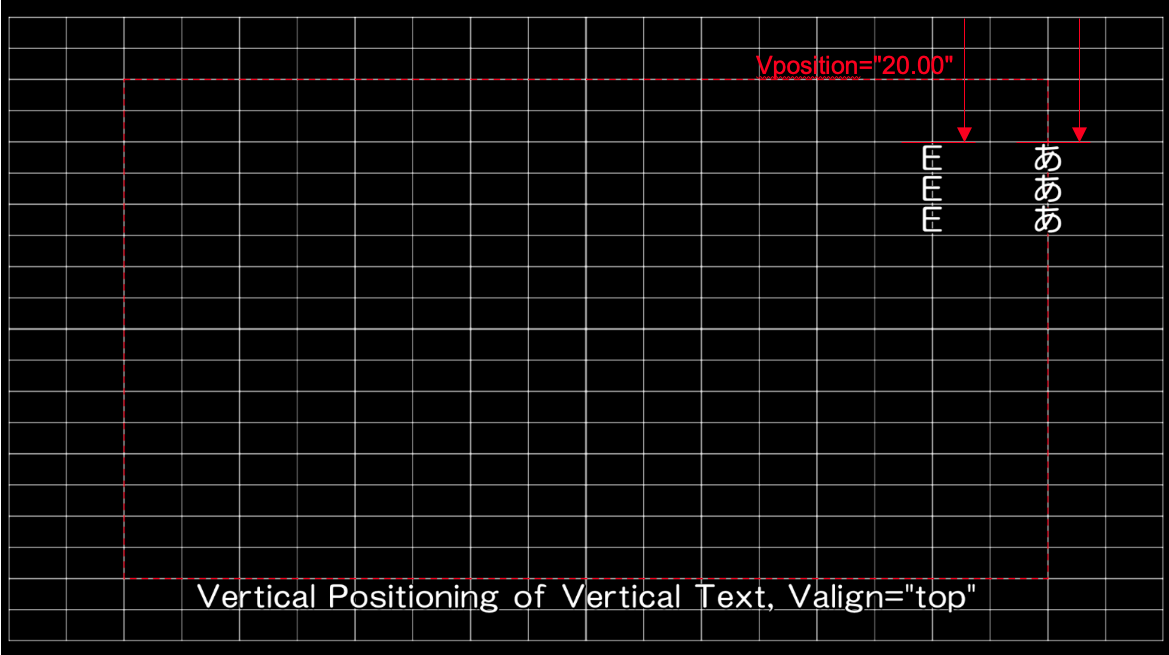
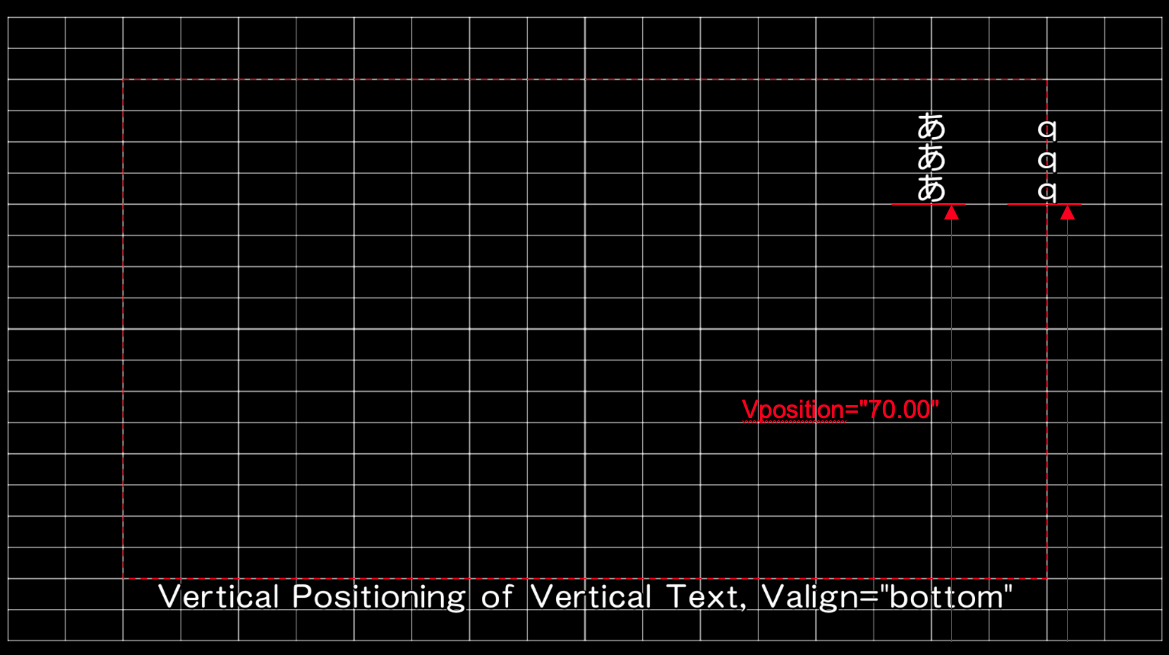
and is NOT expected to produce a rendering as shown in Figure 8 (which is based on the bounding box, "from the side of the primary picture's frame," as specified in SMPTE ST 428-7: 2010).
Figure 8 — Undesired vertical positioning of vertical text🔗
6.1.3Subtitles vertical positioning when using Valign="bottom"🔗
An option to minimize the vertical positioning gap between different SMPTE ST 428-7 versions is to use Valign="bottom" instead of Valign="top". The gap is Descent height in case of Valign="bottom", and is Ascent height in case of Valign="top" as shown in Figure 9.
Figure 9 — Ascent vs descent distance illustration🔗
However, using Valign="bottom" could result in top characters of two vertical subtitle character strings to be slightly misaligned, especially when characters listed in Table 1 are used.
Table 1 — List of characters which could result in top characters of two vertical subtitle character strings to be slightly misaligned 🔗
Name
Unicode
Image
Left Double Quotation Mark
U+201C
“
Right Double Quotation Mark
U+201D
”
Comma:
Presentation Form for Vertical Ideographic Comma
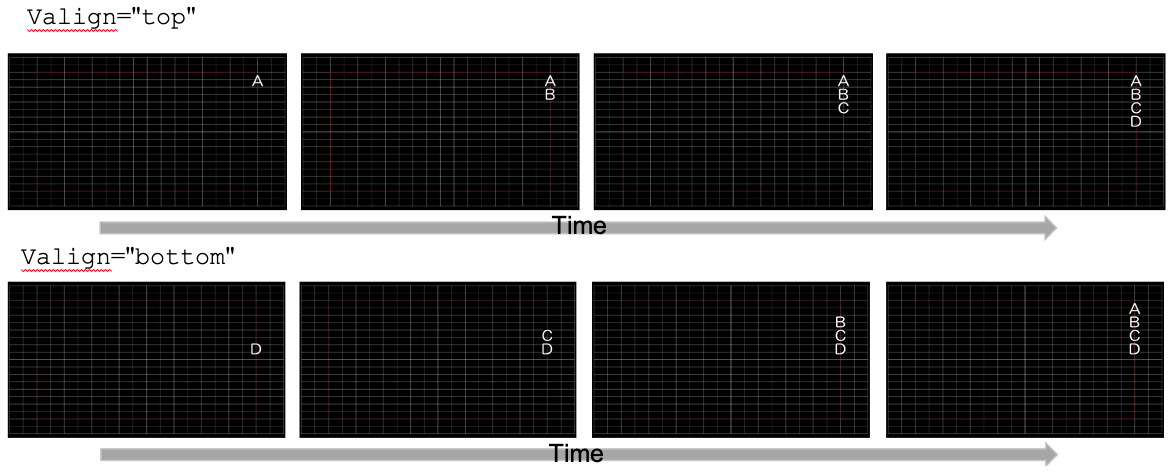
Also, as the rendering order will be bottom to top when Valign="bottom", it might result in making characters appear one after the other from bottom to top, as shown in Figure 16, which is very unnatural to the audience even if the display speed is fast.
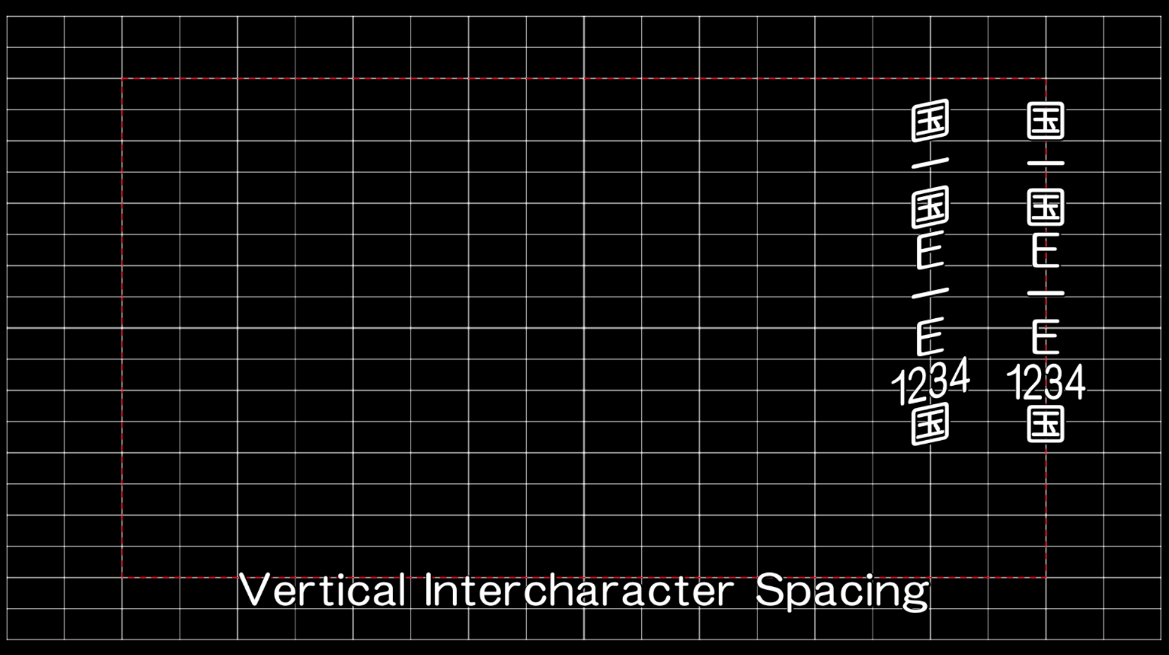
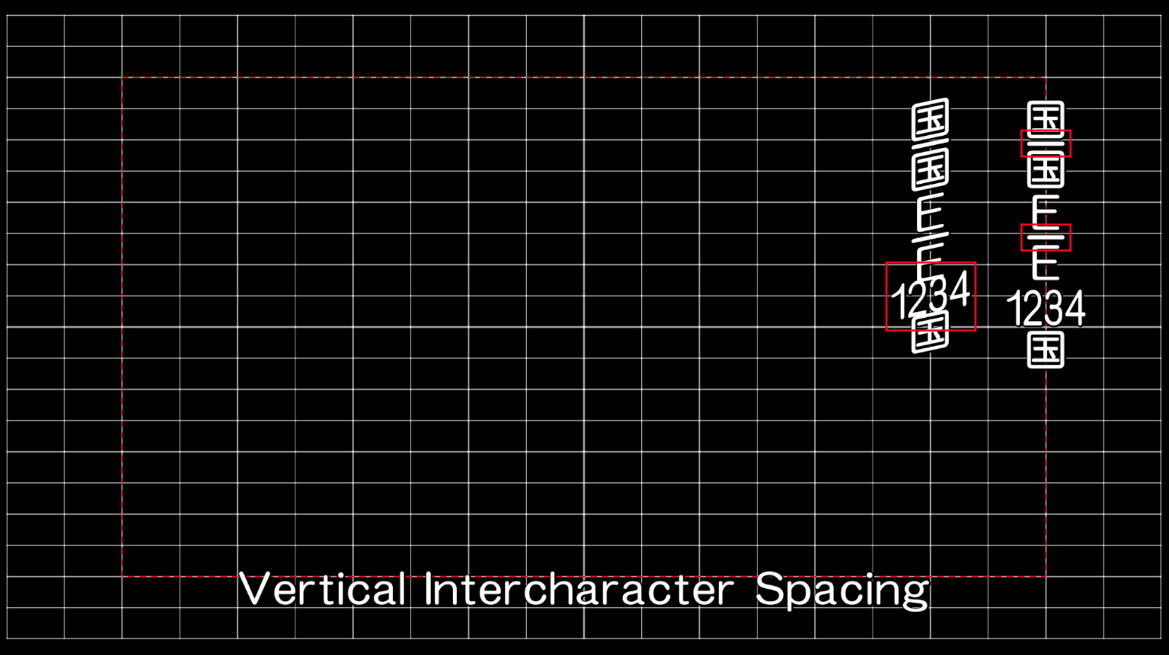
Improper intercharacter spacing affects readability. In vertical text particularly, the intercharacter spacing for a very narrow character like "一" (U+4E00) can vary if vertical metrics do not render properly. There are several possible causes, for example, the renderer does not support vertical metrics, vertical metrics were removed during typeface subsetting before making a DCP, or a typeface itself does not include vertical metrics. The use of TateChuYoko in HGroup elements often causes characters to overlap, especially when italic characters are used.
When using such characters, it is necessary to consider the vertical spacing between characters. For example, for better intercharacter spacing it is recommended to specify each of these possibly mishandled characters using a dedicated Text element and its own Vposition and Hposition specific values in the XML file to avoid collision with characters positioned above or below them. It is not recommended to use Ideographic Space (U+3000) and Space (U+0020) characters, or the Space element for the intercharacter spacing due to uncertain appearance.
EXAMPLE 1
XML file with "一" character, HGroup elements and Italic attribute:
is expected to produce a rendering as shown in Figure 17,
Figure 17 — Desired vertical text intercharacter spacing sample🔗
and is NOT expected to produce a rendering as shown in Figure 18.
Figure 18 — Undesired vertical text intercharacter spacing sample🔗
To achieve the same appearance as shown in Figure 17, specify the Vposition values of the character "一" (U+4E00) and each character (or group of characters) before and after using dedicated Text elements.
EXAMPLE 2
XML file with a dedicated Text element for each character associated with a Direction attribute value equal to ttb or btt:
The horizontal positioning is based on the bounding box. Neither leading Ideographic Space (U+3000) and Space (U+0020) characters, nor the Space element might increase the size of the bounding box as required to shift the text to the right. It is recommended to use a different Hposition for each line of Chidori-style instead.
EXAMPLE
XML file with different Hposition values for each line of Chidori-style: